Kingston Woodlawn Choice Neighborhoods Planning Initiative
Community Workshop Summary Report
February 10, 2026
Prepared in collaboration with the Birmingham Housing Authority (HABD), Woodlawn United, EJP Consulting, SOHO, and LAS.
Two community engagement sessions were conducted to gather resident input on neighborhood conditions, priorities, and opportunities within the Kingston and Woodlawn Choice Neighborhoods area. A total of 96 participants attended, including 61 participants in the morning session and 35 participants in the evening session. A high-level presentation of the survey results was presented before participants engaged in interactive activities using thematic boards and mapping exercises focused on neighborhood assets, service needs, safety, barriers, and early action opportunities. Participant sign-in information was collected to support future analysis of engagement reach.
Participants were invited to provide feedback through written comments and location markers on large neighborhood maps. While marker color meanings were not formally documented during the activity, the placement of markers provided general geographic context regarding community experiences and priorities. The following is a summary of the input that was provided by participants.
Residential and Work Locations
Mapping activities indicated that many participants live within or near the Todd Homes area, with additional representation across Kingston and Woodlawn neighborhoods. Some participants also identified work locations outside the immediate neighborhood boundaries. This information provides context for understanding service access patterns and community mobility.
Neighborhood Assets
Participants struggled to identify assets within the study area, which shows that there is a strong need for additional resources in the community. Responses received were geographically concentrated around the Todd Homes area and included the Coca-Cola Bottling Plant – which is under-construction, Stockton Park, and the Bonita Carter Mural. Participants focused on resources that they would like to see in the area if they could not identify assets, these included:
· Grocery Stores
· Coffee or Tea Café
· Micro-retail and shared office spaces
· Community Health Education Programs (ie. Alzheimer’s or American Heart Assocs.)
· Food bank
· Walking Trails (upvoted)
· Mental Health Facilities
· A Resiliency Hub
· Youth-centric Spaces open on weekends
· An Arts Hub
· Workforce Training Center
Neighborhood Barriers
Participants identified several barriers related to infrastructure, mobility, and neighborhood connectivity. Responses suggested challenges associated with high-speed traffic, difficult intersections and roadways, and lack of infrastructure cohesion. These findings highlight the importance of addressing both physical and systemic barriers to improve quality of life. Specific barriers included:
· Messer Airport Highway
· Richard Arington Jr Blvd
· Walking as a pedestrian through the intersection of Messer Hwy and the railroad tracks at O’Neal Steel – the route to CW Hayes School
· The hairpin turn at Messer Hwy and 46th St N
Service Assets
Participants identified a range of existing community resources, including community centers, youth programs, and housing support services. Participation on this board was more limited compared to other topics, which may indicate opportunities to improve awareness and communication regarding available services within the community. Here are the services identified as assets:
· Todd Homes Community Center (upvoted 6 times)
· The Center staff and after school programs (upvoted 2 times)
· Church of the Highlands: Christ Health - Live Oaks Clinic
· Todd Homes Management Office (upvoted 2 times)
· Religious Institutions
· Senior Programs at Todd Homes: including bingo (upvoted 2 times)
· The Woodlawn Branch Library
· Schools
Service Needs
Participants identified a broad range of service needs across multiple domains. Key priorities included access to health and mental health services, youth programming, family support resources, senior services, transportation assistance, and improved access to technology and information. Participants also emphasized the importance of community hubs where residents can access multiple services in one location. Here are the services requested:
· Sports Leagues
· Access to more public transportation (upvoted 4 times)
· After-school Care
· New Resident Orientation
· Space to let residents use their talents
· Senior Services
· Resource Center (w/ active staff)
· More activities at the Community Center for Adults and Children (upvoted)
· Access to non-HABD residents
· Computer & Internet Access (upvoted)
· Parking Stickers to identify vehicles (permits?)
· Summer Programs
· Math Club
· Reading Nook
· Library in the Community Center
· Bus Stops in the area (upvoted 2 times)
· Counseling for Kids (upvoted)
· Lack of delivery services
· Ride share which works in KW
· HABD Transportation Service
· Accommodations for Children w/ Disabilities
· Public Restroom
· Youth Council
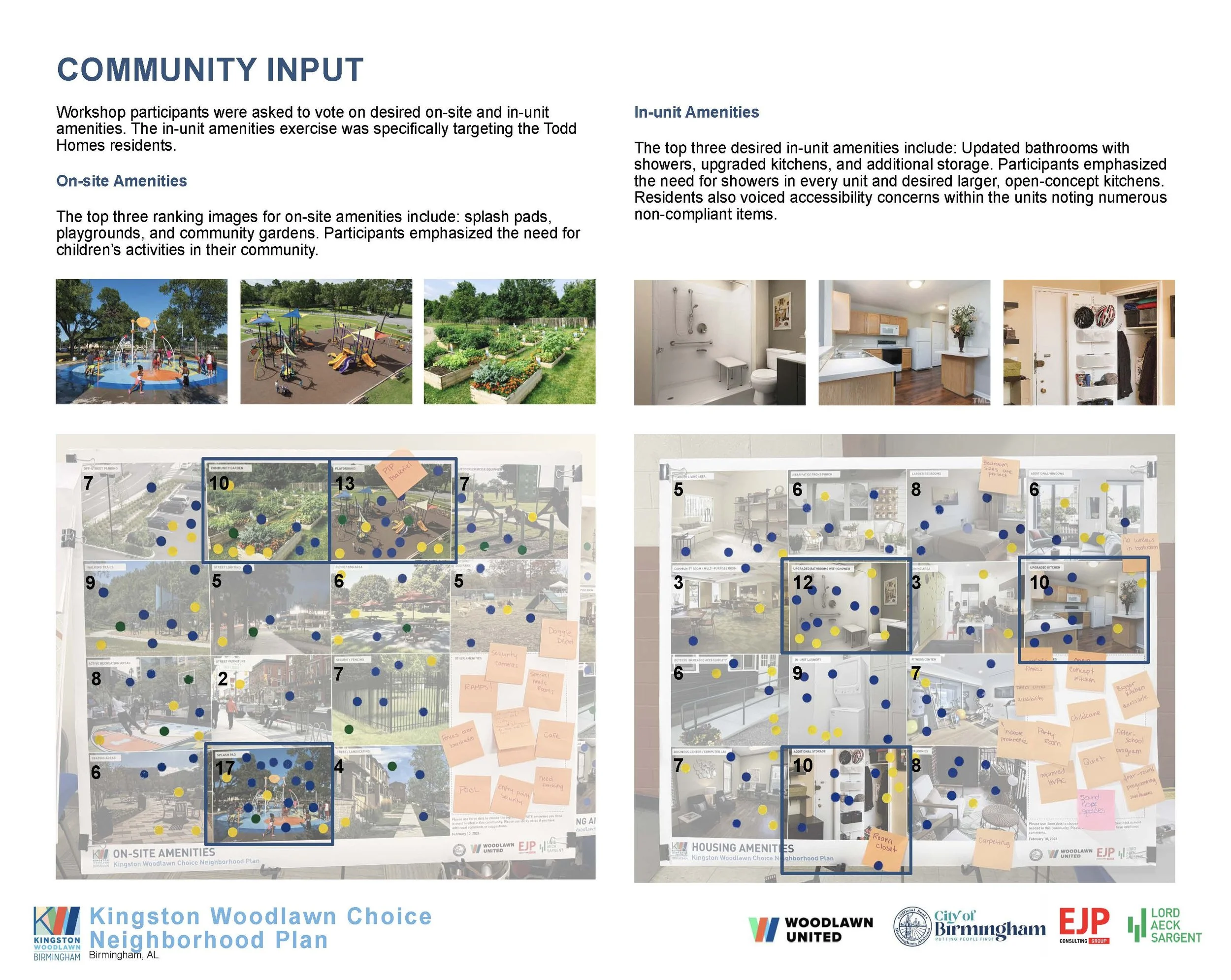
· More Park space at Todd Homes (swing and splash pad) (upvoted)
· Walking Trails (upvoted)
· Neighborhood Days
· Services for the disabled (bus stops and rails)
· More Daycare slots
· Improvements to Hayes K-8 School (transportation not provided)
· Improve safety at pools
Early Action Opportunities
Residents identified several improvements that could be implemented in the short term to create visible positive impact. Suggested actions included walking trails, playgrounds, fitness courts, community gardens, beautification efforts, food access improvements, and expanded youth programming. These responses highlight a desire for tangible neighborhood enhancements that support both health and community connection.
Community Vision and Ideas
Participants shared broader ideas for neighborhood improvement, including grocery stores, road and infrastructure repairs, affordable housing improvements, food banks, walking trails, resiliency hubs, arts programming, workforce training centers, youth-focused spaces, and teaching kitchens. Many responses reflected a strong interest in initiatives that combine health, economic opportunity, and community development.
Community Safety
Residents identified multiple safety concerns, particularly related to traffic safety and pedestrian conditions. Suggestions included speed bumps, crossing guards, traffic controls, signage, cameras, and improved environmental safety measures. Participants also emphasized the importance of safe routes and neighborhood monitoring to enhance perceptions of safety.
Cross-Cutting Community Priorities
Several priorities emerged consistently across engagement activities:
Expanded youth programming and youth-centered spaces
Community centers and multi-service hubs
Access to health and mental health services
Improved food access, including grocery stores
Workforce development and economic opportunities
Infrastructure improvements, including roads and sidewalks
Traffic safety enhancements
Transportation access improvements
Improved communication about available resources
Parks and recreational amenities
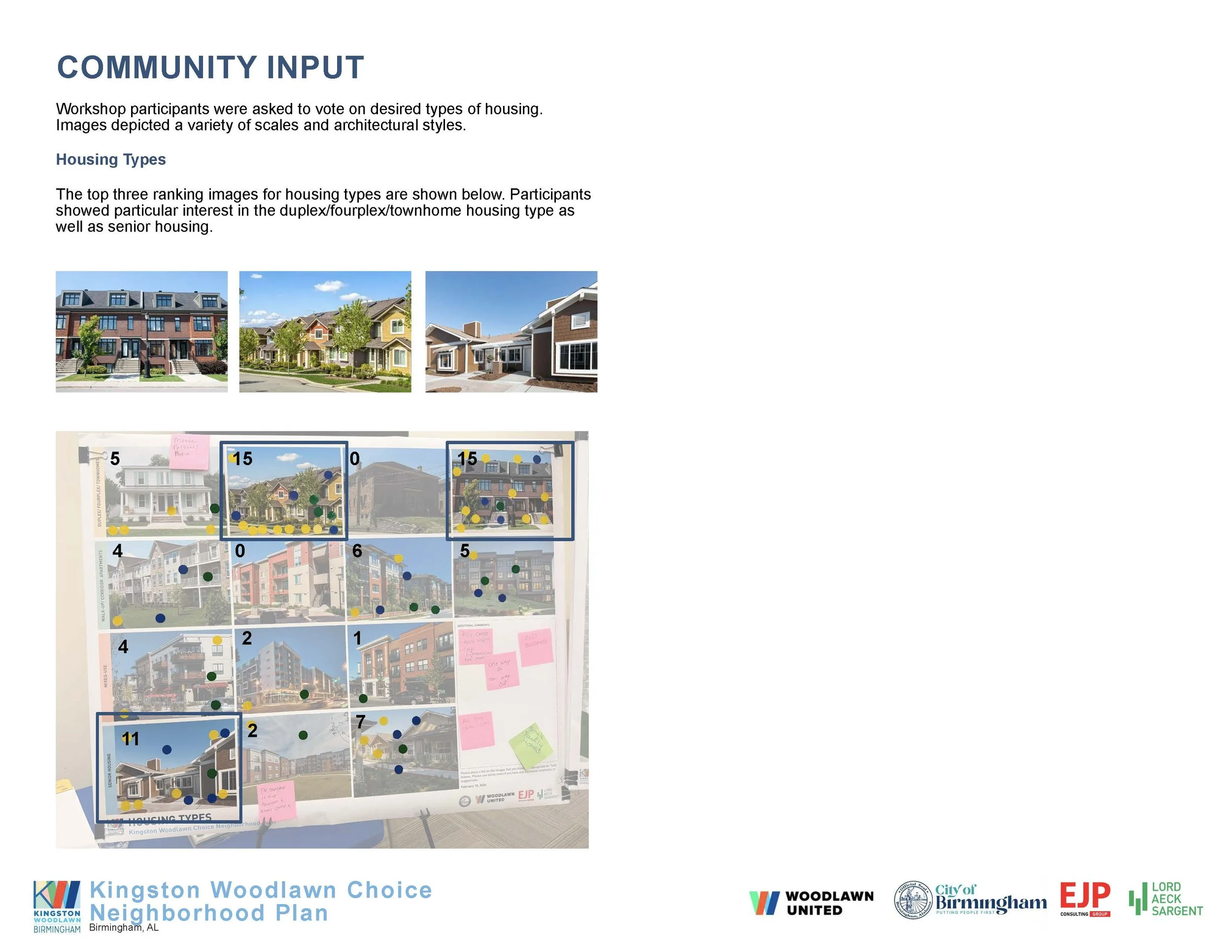
Housing quality and affordability
These cross-cutting priorities provide direction for future planning and investment strategies within the Choice Neighborhoods initiative.